
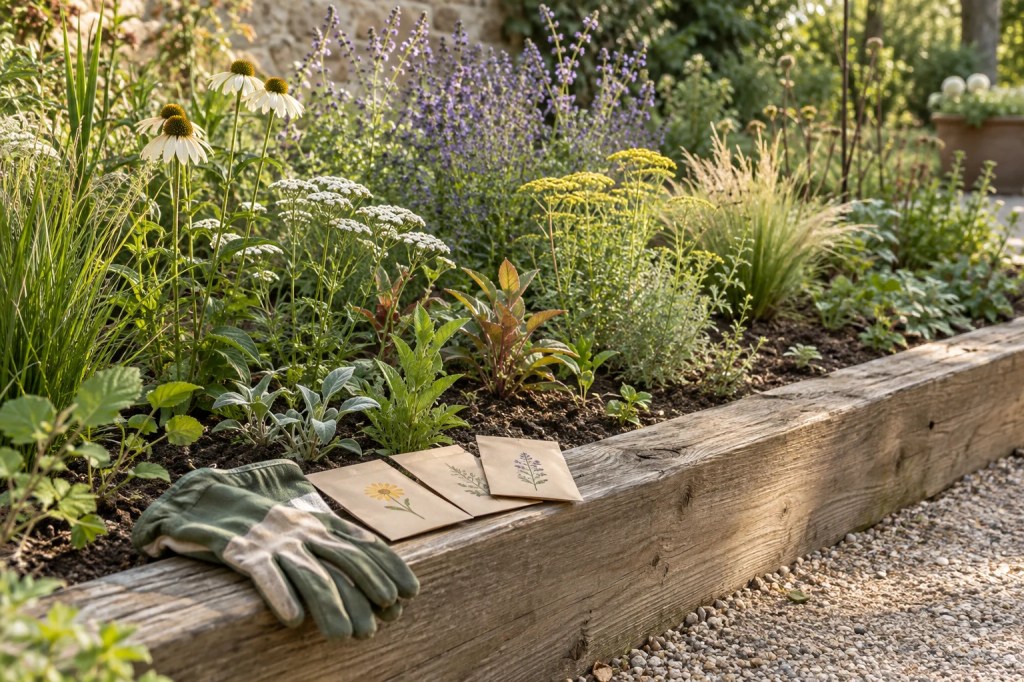
AI-generated garden illustration. Plant combinations and results will vary by site, climate and care.
Home & Garden · By MundoGood · October 1, 2026
A chaos garden is an informally planted mix of flowers or other plants, often started by scattering seeds rather than arranging neat rows. To make one work, keep the layout relaxed while being deliberate about the growing conditions. A sunny-looking seed packet cannot compensate for a shady site, and a beautiful mix may contain plants that do poorly in your region.
Start with one manageable patch
Choose a container or a small, clearly defined bed you can inspect easily. Before buying seeds, watch how light moves across it and check whether water drains away or lingers. Write those observations down. They will be more useful at the seed rack than a photograph of someone else’s meadow.
UConn’s Home Garden Education Office recommends starting on a small scale and warns that scattered seed does not automatically produce a lasting, flower-filled planting. Treat the first season as an experiment you can learn from.
Give the experiment a boundary, such as an existing bed edge or a container. That is an editorial suggestion for keeping the project manageable, rather than a requirement of the technique. It also makes it easier to remember where you sowed and where you can walk.
Read the species list before mixing seeds
Select plants with compatible sunlight, moisture and soil needs. A mixture of drought-loving and moisture-loving species can leave some plants struggling wherever you put it. Check the listed species with your local extension service or native-plant organization, especially when a packet uses broad labels such as wildflower or pollinator mix.
Alabama Cooperative Extension emphasizes both site suitability and avoiding invasive species. It also cautions that a native plant is not automatically low-maintenance in every garden. Native to a region and suited to your particular patch are different questions.
Keep the packets. They record sowing instructions and give you a useful checklist of what you intended to grow. If you combine several packets, photograph the labels first so their identities are not lost in the mixture.
Prepare the ground and choose a local planting window
Remove competing vegetation and prepare the planting area before sowing. Established perennial weeds can keep returning, and weeds compete with garden plants for water, nutrients and light. The University of Minnesota’s weed-management guide explains why preparing a new garden can take longer than simply clearing the surface.
Follow the seed instructions for depth, spacing and moisture. Avoid assuming that every species benefits from being buried, or that scattering more seeds will solve poor establishment.
Timing is local. Alabama Extension says fall sowing often suits wildflowers there; that is not a universal planting calendar. Check advice for your climate and chosen species before sowing in autumn or spring. A soil test can also help you decide whether amendments are needed, rather than adding fertilizer by habit.
Keep the relaxed look, but inspect the seedlings
Learn to distinguish the plants you chose from common local weeds. Remove unwanted seedlings early, before the task becomes harder. Take a photograph from the same spot periodically and note which parts of the bed establish well. That creates a useful record for the next round of planting.
Expect different speeds. UConn notes that many seed-grown perennials need more than one season to flower. A quiet first year does not necessarily mean failure, but neither does every vigorous green plant belong in the bed.
The most useful first-season outcome is a clear answer to three questions: what germinated, what thrived in this site and what you would leave out next time. Let those observations shape the next planting instead of continually adding mystery seed mixes.
Why this question is getting attention
Google’s 2026 gardening search report said U.S. interest in how to start a chaos garden rose 140% that spring. That is a dated search-interest signal, not a measure of current monthly searches or evidence that the method works everywhere. The practical appeal is simple: a garden can be informal without leaving everything to chance.
Editorial note: This AI-assisted article synthesizes the linked sources, checked October 1, 2026. It does not claim hands-on product testing.


Leave a comment