
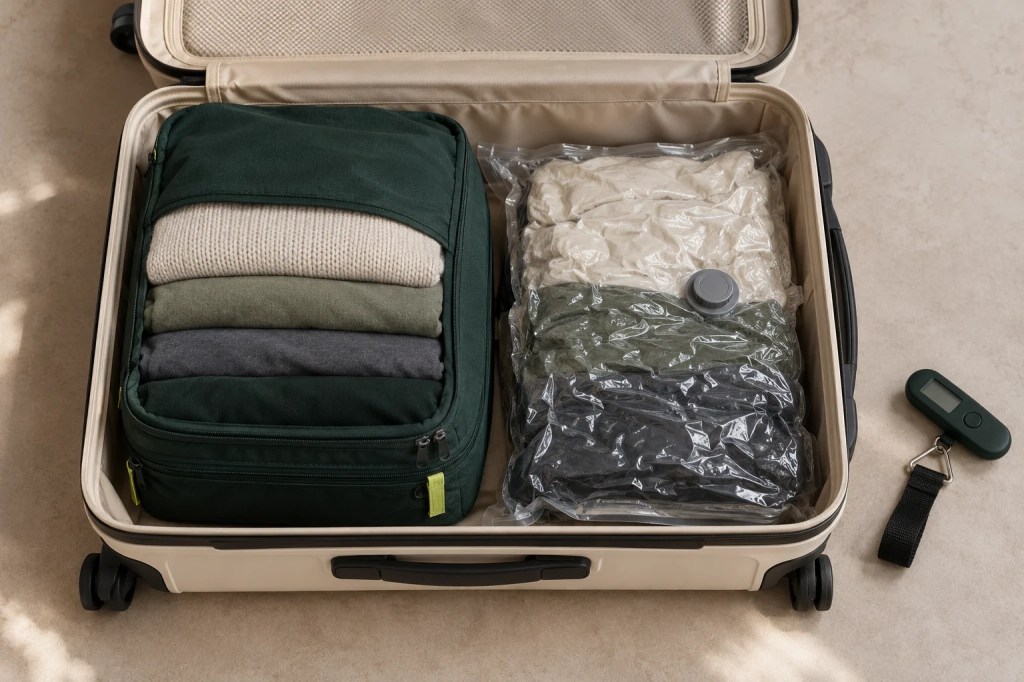
AI-generated conceptual illustration of two packing methods; not a photograph of tested products.
Travel · By MundoGood · October 1, 2026
Compression packing cubes are a useful middle ground when you want clothes organized and slightly more compact. Vacuum or air-removal bags make more sense for bulky, compressible items you will not need repeatedly during the journey. Either way, a smaller pile of clothing still weighs the same.
The right question is how much usable space a system creates in your actual suitcase, including the corners, gaps and items you need to reach.
Three products that do different jobs
Ordinary packing cubes divide a bag into compartments. They make it easier to keep clothing together, but they do not necessarily have a dedicated compression mechanism.
Zip-compression cubes use a second zipper to tighten the packed cube. You close the main compartment first, then operate the compression zipper. Eagle Creek explains the mechanism in its product guidance. The result depends on the clothing and how full the cube is; treat advertised space-saving percentages as product claims rather than universal results.
Air-removal bags squeeze air out of an enclosed volume. Some require a pump or vacuum; others work by rolling or pressing air through a valve. Check the specific closure system before buying. A bag you can compress at home may be inconvenient to repack in a hotel room.
Choose by the job, not the biggest percentage
For a trip with frequent hotel changes, we would prioritize easy opening, recognizable contents and simple repacking. One cube for underwear and another for tops may be more useful than squeezing every garment into a single dense parcel.
For an especially bulky layer, an air-removal bag is worth considering. Eagle Creek’s comparison guide identifies bulky clothing as a useful application, while noting the trade-offs in wrinkling and prolonged compression of insulating fill. Follow the garment manufacturer’s storage instructions rather than leaving technical outerwear compressed indefinitely.
For clothing you want to keep flat, compare a folder or garment sleeve as well. The manufacturer’s organizer guide distinguishes these from cubes and compression bags. These are manufacturer explanations, not independent laboratory comparisons or our own product tests.
Run a useful packing test at home
Try this before deciding that a new organizer has solved your luggage problem:
- Lay out the clothing you genuinely intend to take. Do not add extra outfits simply because a bag appears to create room.
- Pack the suitcase once without compression and note what does not fit comfortably.
- Compress only the bulky or flexible items, then repack the whole case. Check whether the new shapes leave unusable gaps.
- Open the item you are most likely to need mid-trip. If getting it out disrupts everything, change the layout.
- Repack without equipment you will not have at your destination.
- Weigh and measure the closed suitcase against your airline’s allowance for your particular ticket and route.
This comparison is more informative than judging the thickness of one compressed cube in isolation. The practical win is a bag that closes normally and remains usable throughout the trip.
Common reasons compression disappoints
An already tightly packed shirt may have little air left to remove. Shoes and rigid toiletry containers do not become smaller because the surrounding clothes are compressed. A bulging cube can also be a poor match for a narrow suitcase compartment.
Leave some flexibility in the layout. A little spare room is useful when laundry is less neatly folded on the return journey. Keep anything you expect to retrieve during transit accessible instead of burying it beneath tightly packed clothing.
Most importantly, volume and baggage allowance are separate checks. Compression cannot make an overweight bag lighter, and fitting inside the case does not establish airline compliance.
What the search trend actually tells us
Google’s 2025 U.S. travel report placed vacuum bags and compression packing cubes among the top-trending shopping searches in its best-for-travel category. That historical signal explains the interest in this comparison. It does not establish which product performs best, current monthly demand or how much space any individual traveler will save.
Editorial note: This AI-assisted article synthesizes the linked sources, checked October 1, 2026. It does not claim hands-on product testing.


Leave a comment