
English · By MundoGood · Sources checked October 13, 2026
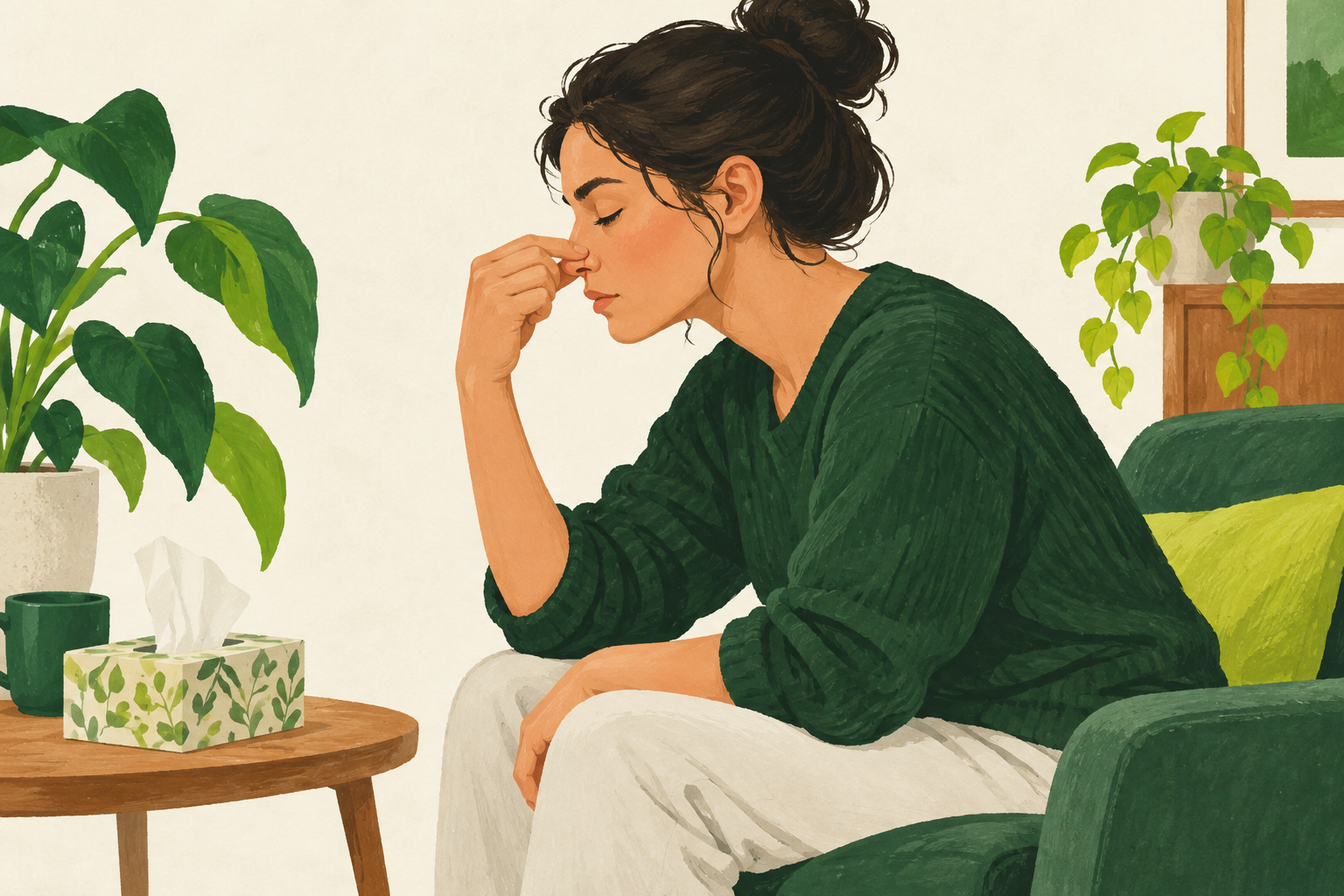
AI-generated conceptual illustration; not a diagnostic image or depiction of a real patient.
A sudden nosebleed can look dramatic, particularly when blood lands on clothing or mixes with saliva. Many begin in the small, easily irritated vessels near the front of the nose. Dry indoor air, forceful nose blowing, and picking can damage this delicate lining. Bleeding from farther back is less common and can be harder to control. The immediate priority is to apply pressure correctly and recognize when home care is no longer enough. ENT Health explains the different sources of nosebleeds.
First aid: lean forward and hold steady pressure
- Sit upright and lean slightly forward. Keep your mouth open and breathe through it.
- With your thumb and finger, squeeze the soft lower part of the nose, just above the nostril openings. Press both sides together; squeezing the hard bony bridge will not put pressure where it is needed.
- Hold continuously for 10 to 15 minutes. Set a timer rather than guessing, and resist releasing your grip repeatedly to check.
- Spit out blood that reaches your mouth instead of swallowing it. Swallowed blood can upset your stomach.
Stay seated while someone brings tissues or a bowl to catch drips. Tipping your head back may hide the visible flow but lets blood travel toward your throat. Lying flat creates the same problem. These steps follow NHS Borders first-aid advice.
Know when to stop trying at home
Get urgent emergency assessment if bleeding continues beyond 10 to 15 minutes despite proper pressure. Seek help sooner if the flow seems heavy, you are weak or dizzy, breathing is difficult, you are vomiting after swallowing substantial blood, or bleeding followed a blow to the head. Do not drive yourself if you feel unwell. Continue leaning forward and applying pressure while help is arranged.
Arrange medical advice for repeated episodes, any nosebleed in a child younger than two, or bleeding with a known clotting disorder or blood-thinning medicine. Breathlessness, palpitations, or unusual pallor also warrant assessment. These are the escalation signs in the NHS nosebleed guide, reviewed in December 2023.
Avoid improvised packing and medication changes
Do not push cotton wool, tissues, or other household material into the nostril. Removing them can disturb the area and restart bleeding. An ice pack is not a substitute for pressure; the NHS describes evidence for its benefit as weak. Dudley Group NHS guidance specifically cautions against putting material into the nose.
If you take an anticoagulant or prescribed aspirin, seek prompt instructions from the prescribing team. Do not stop, skip, or change these prescribed medicines without advice from a clinician. Tell the clinician the medicine name and when it was last taken. Some nasal decongestant sprays are used in medical nosebleed plans, but they are not appropriate for everyone. A pharmacist or clinician can advise whether one fits your circumstances. ENT Health’s guideline-based FAQs discuss these treatments and medication concerns.
Protect the healing area
For the next 24 hours, avoid nose blowing, picking scabs, heavy lifting, strenuous exercise, alcohol, very hot drinks, and lying completely flat. If a clinician has treated or packed your nose, follow that discharge plan instead; restrictions may last longer.
For recurrent dryness, ask about a saline nasal spray or gel intended for this purpose. A humidifier may help in a dry room. Avoid forceful blowing, and keep children’s fingernails short. These measures reduce irritation; they cannot guarantee that bleeding will never recur. Repeated bleeding deserves an examination rather than endless home remedies. An ear, nose, and throat clinician can look for a specific bleeding point and, when appropriate, use cautery or medical packing. ENT Health describes prevention and clinical treatment.
Bottom line: position and uninterrupted pressure matter most. A timer, a forward lean, and a clear threshold for getting help are more useful than trying a succession of household tricks. This is general education, not a diagnosis or an individual treatment plan.
Editorial disclosure: AI assisted with research, writing and the conceptual illustration. This is general health information, not personalized medical advice.