
English · By MundoGood · Sources checked October 13, 2026
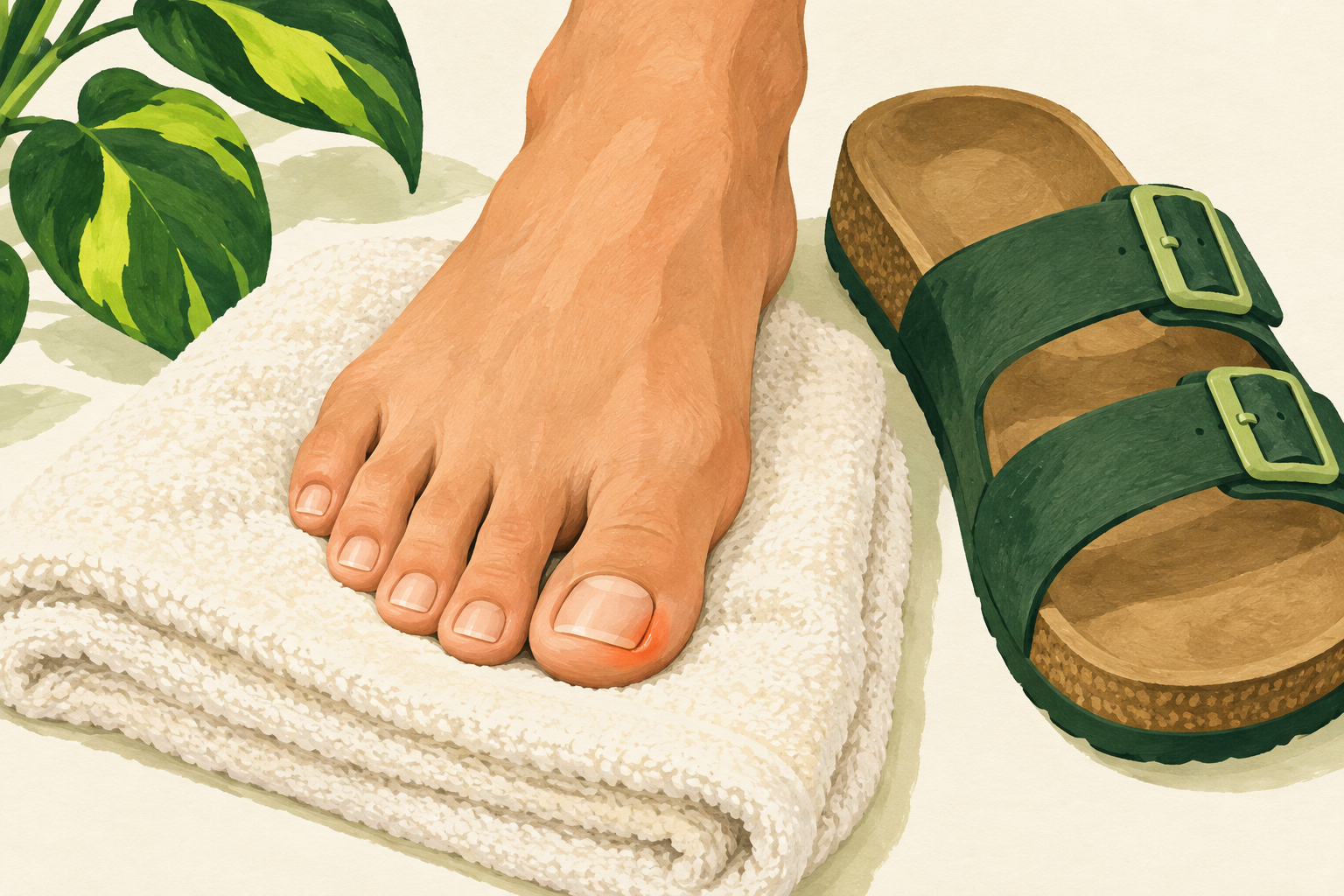
AI-generated conceptual illustration; not a diagnostic image or depiction of a real patient.
An ingrown toenail can turn a comfortable pair of shoes into something you dread wearing. The problem usually begins where a nail edge presses into or breaks the neighboring skin. Early care focuses on reducing irritation. Digging out the corner yourself can add an injury without fixing the reason the nail keeps causing trouble.
Recognize the pattern
The big toe is often affected, on one side or both. Tenderness, swelling, and inflammation develop beside the nail; infection may bring pus or worsening discomfort. Tight footwear, trimming nails into rounded corners, and repeated toe injuries can contribute. In children, shoes that no longer fit and sports-related pressure are worth checking. Cambridge University Hospitals explains common causes and prevention.
Consider the practical trigger: did pain start after a close trim, a new shoe, or repeated knocks during sport? That history can help a clinician plan prevention. It does not determine whether infection is present or whether the nail needs a procedure.
What you can do for a mild problem
If you are otherwise healthy and the toe has mild symptoms without pus or spreading inflammation, the NHS recommends soaking it in warm salty water, then keeping the foot dry for the rest of the day. Choose roomy shoes or sandals that do not press on the painful edge. Do not use hot water that could burn the skin.
- Leave the nail to grow rather than cutting down the sore side.
- Do not pick, dig, or force an instrument beneath the corner.
- Avoid tight, pointed shoes while the area is irritated.
- Ask a pharmacist about suitable pain relief, particularly if you take other medicines or have medical conditions.
Comfort measures may reduce pain, but they do not guarantee that an embedded nail edge will grow out safely. If home care is not helping, arrange an assessment rather than repeating increasingly aggressive attempts to release it.
When to get medical help
Seek prompt advice for pus, worsening swelling, spreading redness, or a toe that is increasingly painful. Fever, chills, or feeling generally unwell alongside a sore toe warrants urgent assessment. If you have diabetes, contact your healthcare team about an ingrown nail rather than relying on home treatment. People with poor circulation, reduced foot sensation, or impaired healing should also get professional advice before manipulating the nail. MedlinePlus advises against home treatment when circulation or nerve problems are present.
Infection and mechanical pressure are related but separate problems. Antibiotics may be prescribed when a clinician identifies infection; they do not reshape the nail or remove a persistently embedded edge. Never use leftover antibiotics or another person’s prescription.
What a procedure may involve
For a severe or recurrent problem, a podiatrist or surgeon may remove the affected portion of nail after numbing the toe. Sometimes the nail-producing area is treated to reduce regrowth of that troublesome edge. The result can be a narrower nail. Removing the whole nail is another option in selected cases, rather than a requirement for everyone. University Hospitals Sussex describes surgical approaches in its patient information.
Ask what will be removed, whether regrowth is intended, how dressings should be changed, and when your usual footwear and activity will be appropriate. Aftercare depends on the procedure; a general internet soaking routine should not replace your treating team’s instructions.
What the research can and cannot tell us
A 2023 systematic review of randomized trials found that adding phenol treatment to nail removal appeared to reduce recurrence compared with removal alone. However, the authors rated that evidence very low quality. Problems with study design and reporting limit confidence in choosing a universally best operation.
This finding supports a discussion about recurrence prevention, not a promise of permanent cure or a reason to attempt chemical treatment at home. The trade-off includes a wound that needs care, possible complications, and the future appearance of the nail.
Prevent the next episode
Once the current problem is resolved, trim nails straight across and avoid cutting them very short. Choose footwear with adequate toe room, keep feet clean and dry, and change sweaty socks. Ask for help with nail care if you cannot see or reach your feet safely.
Sources were checked on October 13, 2026. NHS national guidance was reviewed in June 2025; the surgical review was published in June 2023. Hospital leaflets describe local practice, which may differ from your own care plan. This article provides general education, not an individual treatment recommendation.
Editorial disclosure: AI assisted with research, writing and the conceptual illustration. This is general health information, not personalized medical advice.