
English · By MundoGood · Sources checked October 11, 2026
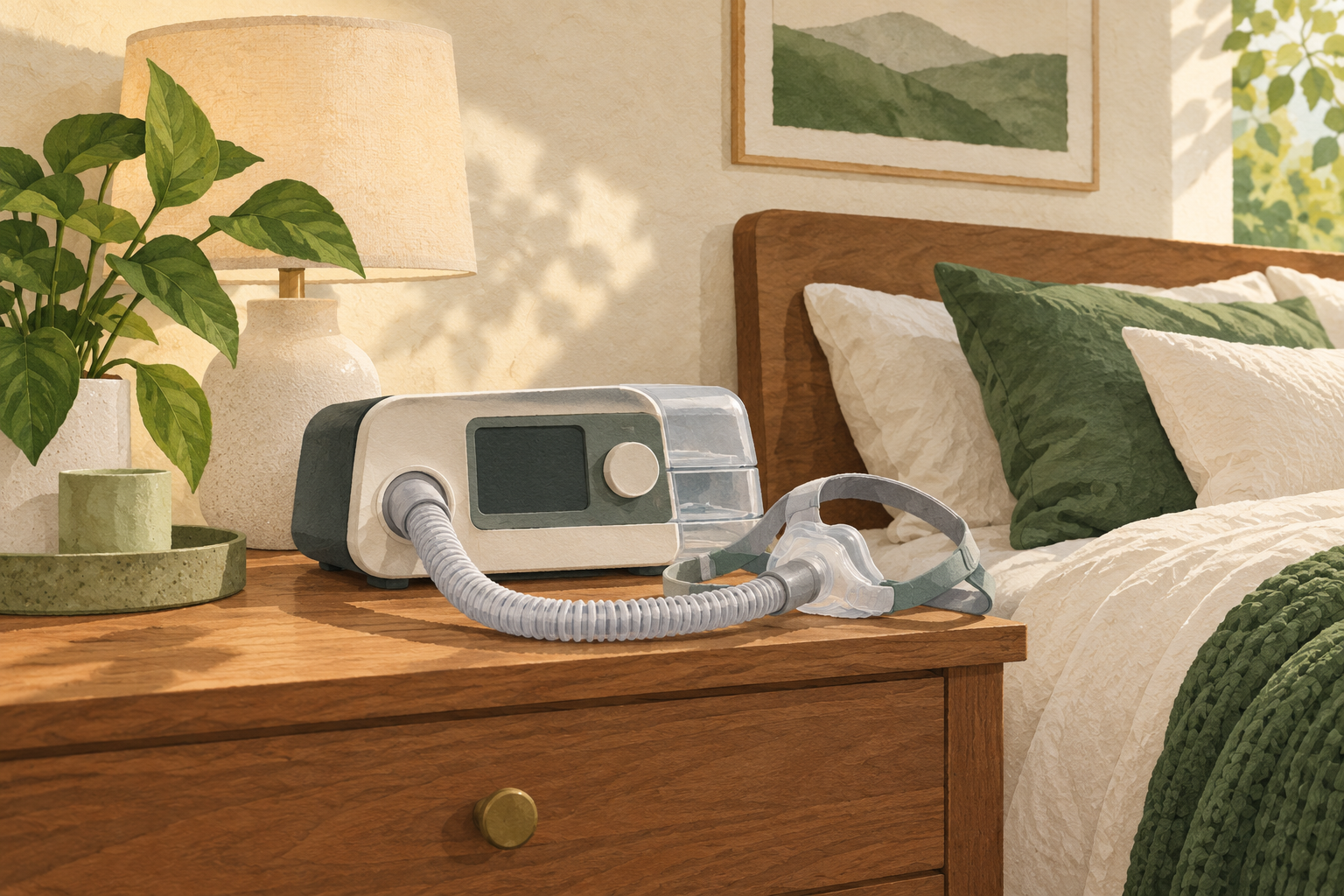
AI-generated conceptual illustration; not a medical diagnostic image.
What obstructive sleep apnea means
Obstructive sleep apnea (OSA) happens when the upper airway repeatedly narrows or closes during sleep. Breathing effort continues, but airflow falls or stops. These episodes can interrupt sleep and lower oxygen levels. This is different from central sleep apnea, in which breathing signals from the brain are disrupted. The distinction matters because treatment is not interchangeable. NHLBI explains the two conditions.
OSA is also different from simply having trouble falling asleep. Someone may spend enough hours in bed and still wake unrefreshed because breathing repeatedly disrupts sleep. Conversely, insomnia and OSA can coexist. Better bedtime habits may help sleep quality, but they cannot reliably correct a repeatedly blocked airway. This guide concerns adults; children need age-specific assessment.
Signs that should lead to assessment
Loud snoring, witnessed pauses, choking or gasping at night, and unexplained daytime sleepiness are important clues. Morning headaches, fatigue, frequent nighttime urination and concentration problems may also occur. Some people, including women, report fatigue or insomnia rather than obvious sleepiness. Snoring alone does not prove OSA, and a person who sleeps alone may have no witness to breathing pauses. Discuss the whole pattern with a clinician. NHLBI symptom guidance describes this broader presentation.
Risk assessment should not rely on body size alone. Airway anatomy and other health conditions matter. Bring a medication list, relevant medical history and a short record of sleep and daytime symptoms. Mention near misses while driving, falling asleep at work, resistant high blood pressure, or planned surgery. These details can affect the urgency of evaluation.
Why a sleep test matters
A clinician uses the history and examination to decide which sleep test is appropriate. Testing may take place at home or in a laboratory and measures breathing-related events; laboratory studies can collect additional sleep information. A smartwatch estimate or an audio recording may prompt a conversation, but does not replace a clinical diagnosis. Ask what the test found, how severe the breathing disturbance was, and whether further testing is needed if symptoms and results disagree. NHLBI diagnosis guidance and its sleep-study explanation outline the process.
Treatments with useful evidence
Positive airway pressure (PAP) holds the airway open during sleep. CPAP provides continuous pressure; other devices adjust pressure in different ways. A 2019 American Academy of Sleep Medicine systematic review found benefits for sleepiness, sleep-related quality of life and blood pressure, as well as reduced breathing-event severity. Evidence for preventing major cardiovascular events is less certain, so treatment should not be sold as a guaranteed way to prevent heart attacks.
Treatment choice also depends on symptoms, severity and preferences. NICE guidance, published in 2021, distinguishes minimally symptomatic mild disease from OSA that impairs daily functioning. A professionally fitted mandibular advancement appliance can be an option for selected adults, particularly when PAP is unsuitable or not tolerated. Dental suitability and follow-up matter. Selected people may benefit from positional treatment, surgery or an implanted nerve stimulator after specialist assessment.
Where weight treatment fits
For people with obesity, weight management can reduce OSA severity, but it is not a prerequisite for receiving effective breathing treatment. The 2024 SURMOUNT-OSA trials found that tirzepatide reduced breathing-event frequency over 52 weeks in adults with obesity and moderate-to-severe OSA. Those results do not establish that the medicine treats every form of sleep apnea or permanently cures it.
The FDA approved tirzepatide for that defined adult population in December 2024, alongside dietary change and physical activity. Common adverse effects include nausea, vomiting and diarrhea. It must not be used with a personal or family history of medullary thyroid cancer, multiple endocrine neoplasia syndrome type 2, or a previous severe allergic reaction to tirzepatide. Other important warnings include pancreatitis and gallbladder problems. Eligibility, pregnancy plans, other medicines, access and local approvals require a prescribing discussion; this is not a complete safety list. Do not stop PAP because weight or snoring improves; reassessment is needed.
Making treatment workable at home
Use prescribed PAP whenever sleeping, including naps. If the mask leaks, the nose feels dry, or pressure is uncomfortable, ask the sleep team for help rather than quietly abandoning treatment. Mask fitting, humidification and supervised adjustments can make treatment more tolerable. Follow device cleaning instructions. NHLBI practical CPAP guidance emphasizes consistent use and support.
Regular sleep hours, physical activity, avoiding excess alcohol and stopping smoking support care. Side sleeping helps some people, but is not a universal substitute for treatment. Review sedating medicines with a clinician; do not abruptly stop prescribed drugs. OSA is usually managed over time, although some people achieve remission after addressing contributing causes. Repeat evaluation after major weight change or recurrent symptoms helps confirm whether treatment remains effective.
Safety and next steps
Do not drive or operate dangerous equipment when sleepy. Seek prompt clinical advice about disabling sleepiness or witnessed breathing interruptions. Chest pain, severe breathing difficulty while awake, or stroke-like symptoms require emergency care. Tell surgical and anesthesia teams about OSA and prescribed equipment. The immediate goal is reliable breathing during sleep, safer daytime alertness and a treatment plan you can actually use. This is general education, not an individual diagnosis or prescription.
Editorial disclosure: AI assisted with research, writing and the conceptual illustration. This is general health information, not personalized medical advice.