
English · By MundoGood · October 3, 2026
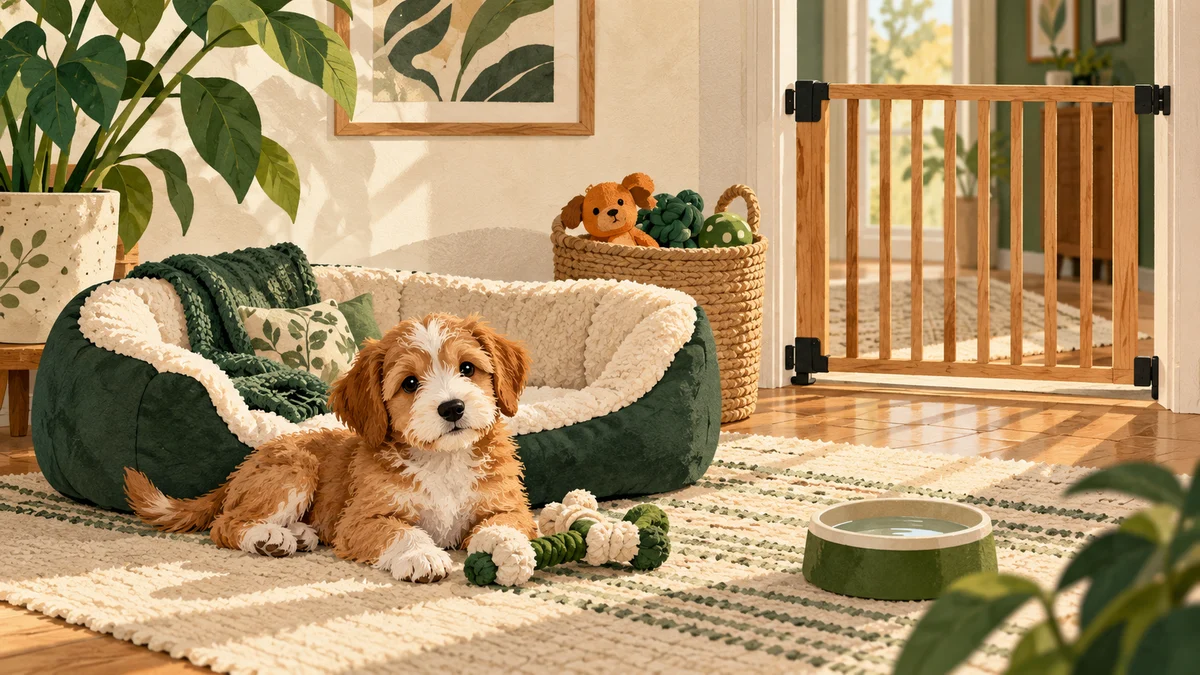
AI-generated conceptual illustration of preparing a home for a puppy.
The most useful preparation for a new puppy happens before anyone opens the front door. Put the essentials where you will use them, remove reachable hazards and agree who is responsible for each part of the day. That gives the household a workable plan when the excitement of arrival takes over.
This guide focuses on your home and routines. Food quantities, vaccination questions and individual health needs belong with your veterinarian.
Set up one manageable starting area
Choose a part of the home where you can supervise the puppy easily. The American Kennel Club’s first-day guidance recommends limiting the initial space rather than introducing every room at once. A quieter start gives the puppy time to explore without a crowd.
Decide where the puppy will rest, where water will go and which doorway leads to the chosen toilet area. Introduce family members calmly, one at a time, and postpone the welcome party. Supervise children and let the puppy approach without being passed around.
Walk through the arrangement yourself. Can you reach the leash without leaving the puppy unattended? Is the route to the door clear? Small adjustments now make repeated tasks easier later.
Buy the basics with a purpose
The ASPCA’s home-preparation checklist includes bowls, a leash and collar with identification, toys, and potentially a crate and gates.
Build your shopping list around those functions:
- A clearly identified walking kit stored near the exit
- Food and water bowls in an accessible, easy-to-clean place
- A designated resting space
- Suitable toys for supervised play
- Gates or other appropriate barriers for rooms that are off limits
- A place for cleaning supplies that the puppy cannot reach
Avoid buying several versions of every accessory before you know what fits your space and your puppy. Keep receipts, packaging and product instructions together so another household member can check them.
Check the house at puppy height
Get down low and inspect underneath furniture. The ASPCA highlights small objects, reachable electrical cords, plants and cabinets among the things new pet owners should check.
Do a second pass using its more detailed inspection checklist. Put medications and cleaners in inaccessible enclosed storage, secure rubbish, and pick up small children’s toys. Check the garden for old pest-control products as well as the obvious items indoors. A label saying a bait station is pet-resistant does not mean it is pet-proof.
Give each person one zone to inspect, then ask someone else to walk through it. A fresh pair of eyes may spot a dropped tablet, dangling cable or open cupboard the first person missed.
Agree who does what
Write a short household handover rather than relying on “someone will do it.”
Name the person covering arrival, meals, toilet trips, evening supervision and the overnight routine. Add a backup for each role. If work schedules overlap, mark the actual handover time.
Use one shared note for what has happened: a meal given, a toilet trip completed or supplies running low. Keep instructions brief enough that everyone will use them. Agree the same basic house rules, including access to furniture and sleeping areas, before the puppy arrives.
Leave room for adjustment
The AKC recommends a consistent routine and a veterinary appointment soon after arrival. Keep the puppy’s existing records and the clinic’s contact details in one place.
At the end of the first day, review the setup together. Move anything awkward, replenish the essentials and clarify tomorrow’s responsibilities. A useful first-day plan is one the household can repeat calmly.
About this guide
By MundoGood. Researched and drafted with AI assistance; primary sources checked October 3, 2026. This is an explanatory guide, not a claim of firsthand testing or professional assessment.