
English · By MundoGood · October 2, 2026
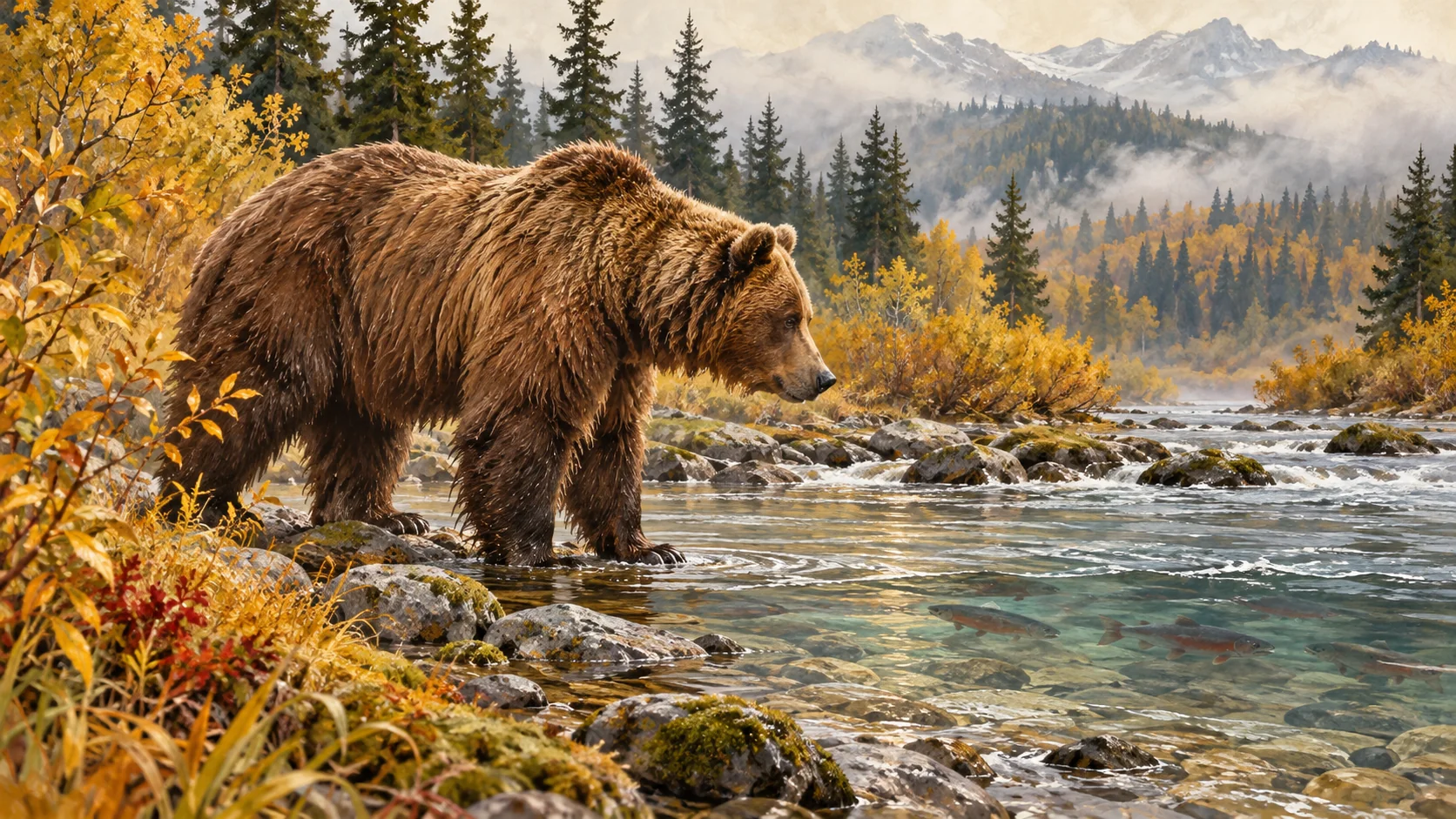
AI-generated nature illustration; it does not depict an identified Fat Bear Week participant.
The dramatic autumn size of Katmai’s brown bears is part of their survival strategy. Summer and fall feeding builds the energy reserves they will use through winter, when they spend months in dens without regular access to food.
Fat Bear Week turns that seasonal change into an accessible wildlife story. For readers arriving after this year’s event: the National Park Service scheduled the 2026 tournament for September 22–29, so its voting period has already ended as of this article’s October 2 source check. This is a guide to the biology, not a current voting announcement. NPS’s 2026 event notice.
Fat is stored fuel for a season of scarcity
A bear emerging from its den and the same bear near the end of summer can look strikingly different. The National Park Service explains that bears may lose up to a third of their body weight during winter hibernation, and large individuals can add hundreds of pounds of fat before denning. Why fat matters at Katmai.
Think of the seasonal change as a shift between gathering energy and living from stored energy. The scale of that shift is what makes the photographs so memorable. It also explains why an autumn silhouette alone tells only part of the story: the important comparison is with that animal’s earlier condition and circumstances.
The park’s hibernation explanation describes a major reduction in breathing and heart rate, with body temperature falling much less than in some other hibernating mammals. Bears still use energy while in the den. Fat accumulated beforehand supplies that need; winter is not an interval in which their bodies stop working. Most Katmai bears begin denning in October or November. NPS’s hibernation explanation.
Why salmon make such a difference
At Brooks River, access to salmon links bear behavior to the river’s seasonal food supply. The falls can temporarily concentrate migrating fish in places where bears can catch them efficiently. Later, as spawning progresses, bears may move to other parts of the river and feed on dead or dying salmon. Katmai’s brown-bear FAQ.
The same FAQ describes several fishing techniques: waiting at the falls, searching with the head underwater, chasing fish and sometimes diving. A bear’s size, access to productive fishing spots and learned skills help explain why feeding success differs among individuals. The park notes that a large dominant male can sometimes eat more than 30 fish in a day when fish are abundant; that is a conditional observation, not an everyday quota for every bear.
This is a useful way to watch a bearcam: look at what the animal is doing, where it is doing it, and how the location changes its opportunities. A quiet stretch of river can still be an important feeding site even when it lacks the spectacular sight of fish jumping into open jaws.
Read before-and-after photos carefully
The contest grew from a comparison of photographs of the same bear taken months apart. It began as a one-day event in 2014 before becoming a week-long competition. Its educational purpose includes drawing attention to the ecosystem that supports the bears. Fat Bear Week’s history.
For a more informative comparison, use this checklist:
- Verify identity. Make sure the captions identify the same bear, rather than two similar-looking animals
- Read both dates. Compare the actual interval instead of assuming every pair covers a full season
- Compare the pose. A side view and a bear facing the camera emphasize different dimensions
- Notice the setting. Water, vegetation and body position can obscure parts of the silhouette
- Separate observation from measurement. “The bear looks fuller” is different from knowing how much weight it gained
These are viewing habits, not a method for calculating body fat from a photograph. An audience vote is also a different kind of result from a standardized scientific measurement. Enjoy the competition without turning its winner into a precise ranking of every bear’s health or winter prospects.
The habitat is part of the story
The photographs invite us to focus on an individual bear, but the animal’s seasonal success depends on access to food and the conditions that support it. Katmai’s explanation of Fat Bear Week makes that connection explicit: abundant salmon and an intact ecosystem are central to the bears’ transformation. The park’s ecological context.
For a family or classroom discussion, try a better question than “Which bear is biggest?” Ask: “What would this bear need to repeat this successful feeding season next year?” That question connects the charismatic animal to the river, its food and the time it has available before winter.
The enduring appeal of Fat Bear Week is that an entertaining picture can lead to a real ecological explanation. The bear’s changing body makes a seasonal energy problem visible.
Sources and editorial note
MundoGood uses AI assistance to research and draft its guides. This article synthesizes the linked primary sources; it is not a hands-on test or an endorsement by the organizations mentioned.